Destination
Edfu
Explore Edfu with practical planning notes, local context and the sights that make this stop worth adding to a wider Egypt itinerary.
Quick answer
Tour operators should integrate Edfu as a vital stop on Nile River itineraries, typically experienced during a cruise segment between Luxor and Aswan, offering a focused cultural immersion into ancient Egyptian religious practices.
Key facts
- Location: Situated on the west bank of the Nile River, between Luxor and Aswan in Upper Egypt.
- Nearest airport/access: Accessible primarily via Nile cruise; nearest international airports are Luxor (LXR) and Aswan (ASW).
- Suggested nights: Typically a day stop or a few hours as part of a Nile cruise program.
- Best season: October to April for mild, pleasant weather; avoid peak summer (June-August) due to extreme heat.
- Key sights: Temple of Horus (Edfu Temple), known for its exceptional preservation.
Role in a Program
Edfu serves as a crucial component for any comprehensive Egypt itinerary, particularly for those focusing on the rich history of the Nile Valley. It is almost exclusively visited as a day stop during Nile cruises operating between Luxor and Aswan. For trade buyers, Edfu presents an opportunity to provide a deep dive into Ptolemaic-era temple architecture and religious iconography, offering a distinct cultural experience from the more ancient Pharaonic sites found in Giza or Cairo. Its inclusion ensures a well-rounded historical narrative, complementing multi-country journeys like an Egypt, Jordan & Morocco Grand Journey, by showcasing an important chapter of Egyptian civilization.
Priority Sights
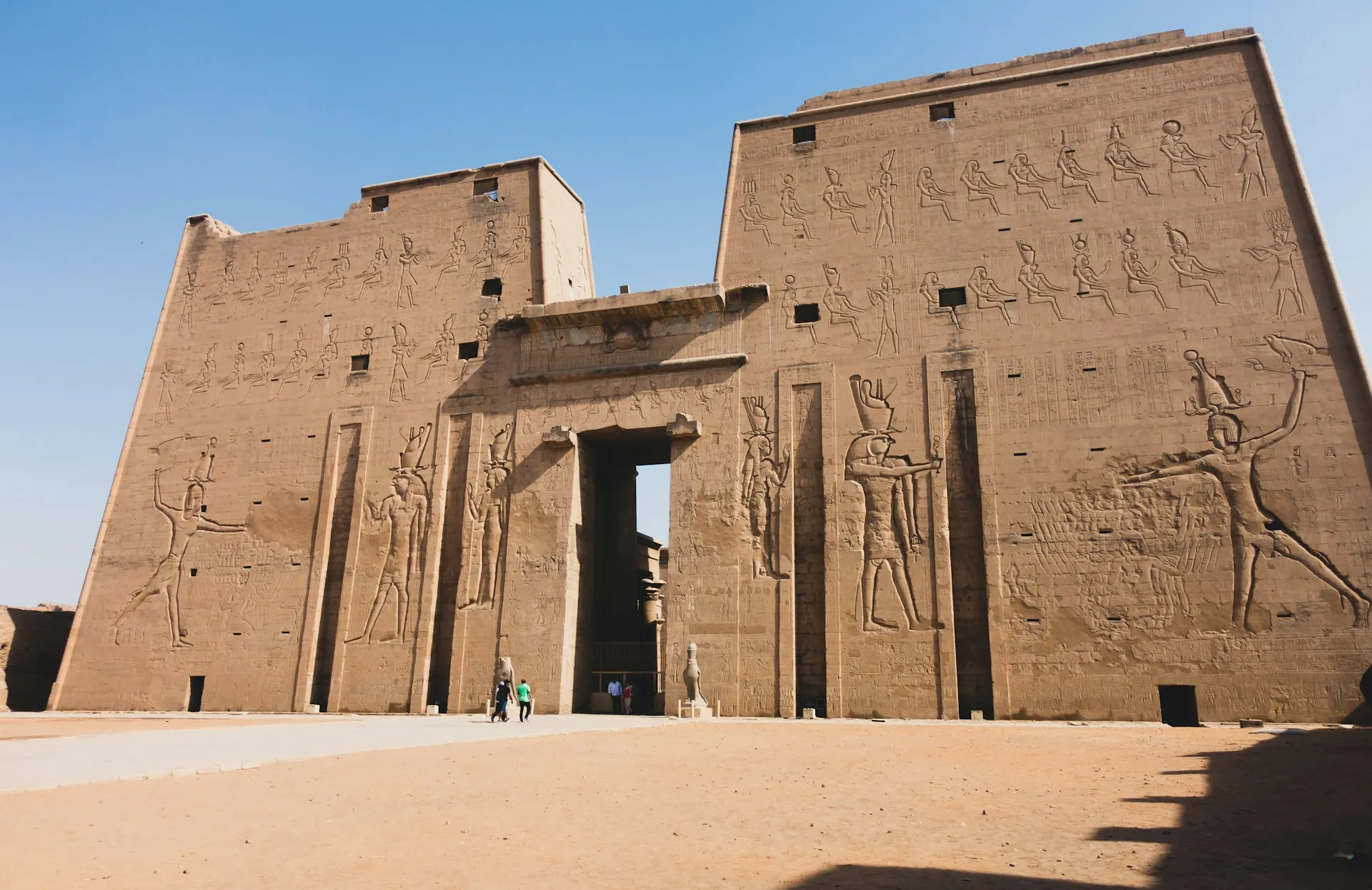
- Temple of Horus (Edfu Temple): The primary and virtually sole attraction in Edfu, this is one of Egypt's best-preserved ancient temples. Dedicated to the falcon god Horus, its impressive pylons, courtyards, halls, and intricate hieroglyphs offer unparalleled insight into ancient Egyptian religious rituals and cosmology. It is a prime example of Ptolemaic architecture, reflecting strong Pharaonic traditions.
- Nilometer: Located within the temple complex, this ancient structure was used to measure the Nile's water levels, crucial for predicting harvests and assessing taxes.
- Mammisi (Birth House): Also part of the main temple, this structure celebrates the divine birth of Horus.
- Sanctuary of Horus: The innermost part of the temple, housing a replica of the sacred barque of Horus, an essential element for religious processions.
Suggested Allocation and Seasonality
Edfu is typically allocated a stop of 2-3 hours as part of a Nile cruise, allowing sufficient time for a guided tour of the Temple of Horus. It is a common morning or afternoon stop for vessels sailing north or south. The best season for visits is from October to April, when temperatures are mild and conducive to outdoor exploration. The shoulder months of May and September can also be suitable, though warmer. The summer months (June to August) are generally discouraged for groups due to extreme heat, which can impact guest comfort and enjoyment, especially for extensive temple visits.
Operations Notes for Groups
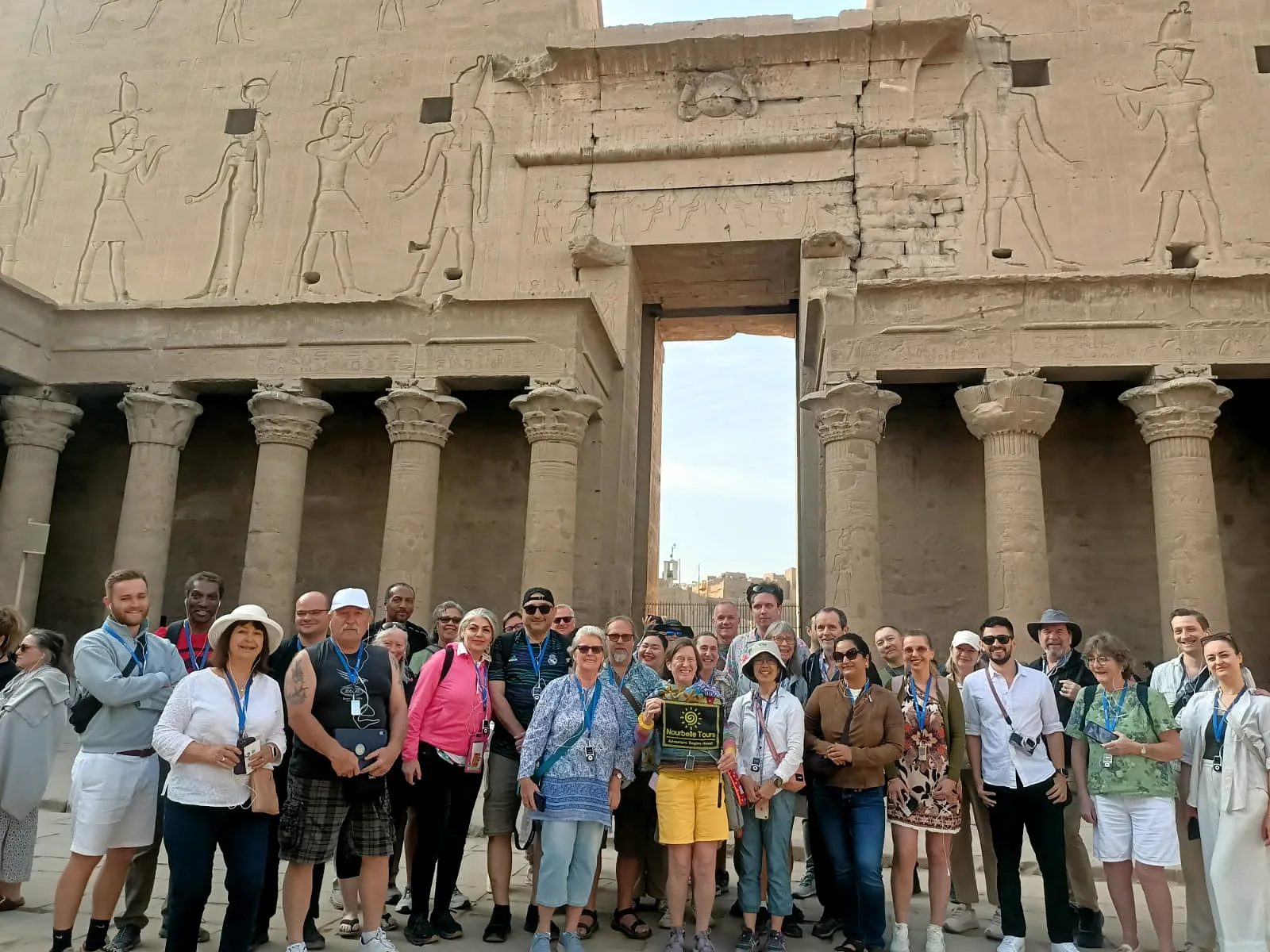
Access to the Temple of Horus from the riverbank typically involves a short horse-drawn carriage ride. Nourbelle DMC coordinates these logistics, ensuring seamless transfers for groups. It is advisable to brief guests on the local transport method and to manage expectations regarding vendors near the temple entrance. We recommend early morning visits to avoid crowds and the midday heat, especially for larger groups. Professional, licensed Egyptologists will lead tours, providing historical context and enriching the experience. For specific group requirements or itinerary adjustments, please request a quote with our B2B team to tailor the perfect program.